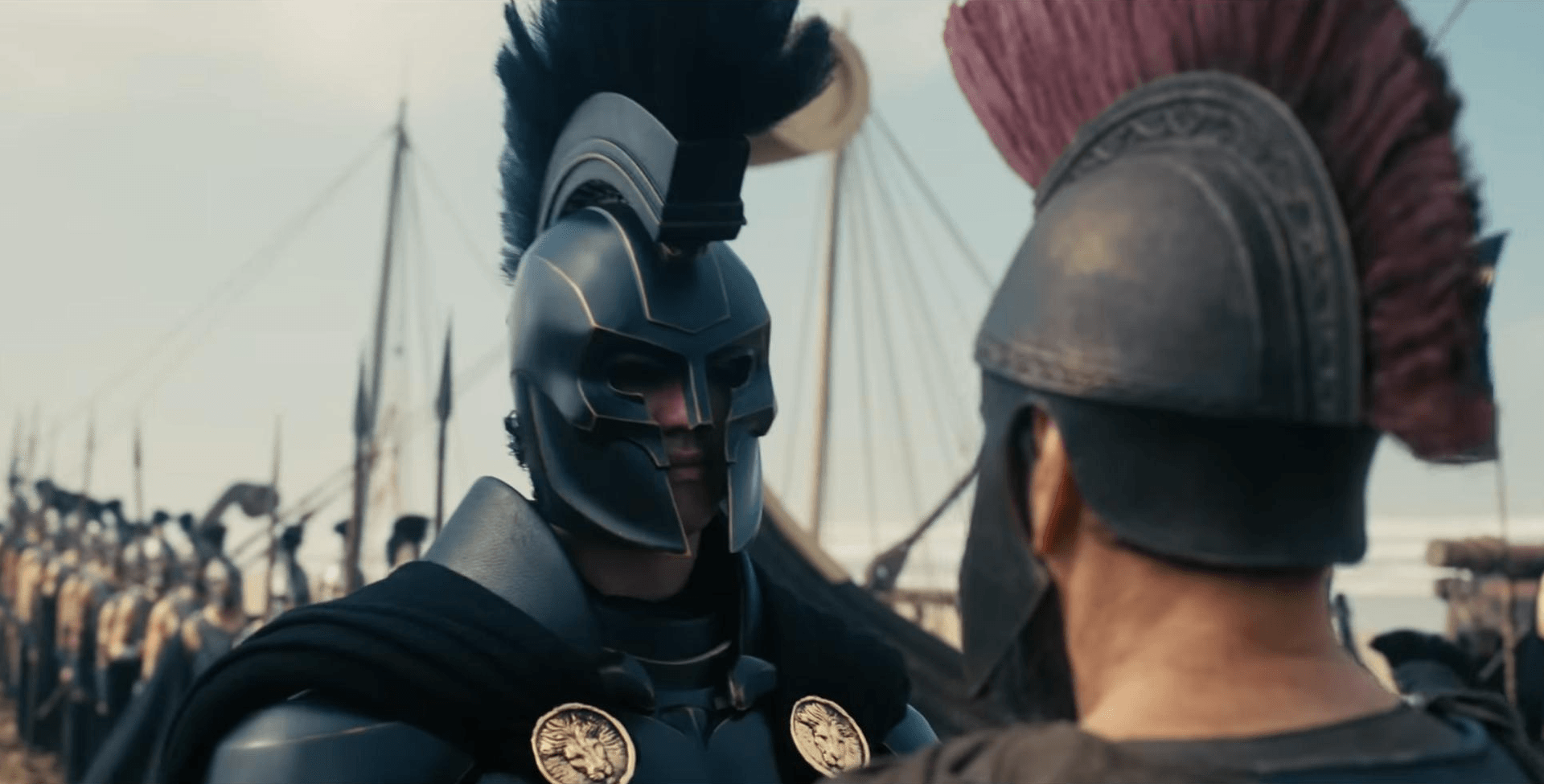
The $250m Ancient Saga: Why Nolan’s The Odyssey Is Cinema’s Next Radical Shift

THE CORE PREMISE: AN ANCIENT SURVIVAL SAGA
Christopher Nolan is officially taking us into ancient Greece with his most ambitious production yet. The Odyssey is directly adapted from Homer’s foundational 8th-century BC epic poem. The story follows Matt Damon as Odysseus, the brilliant but psychologically burdened King of Ithaca.
After surviving ten brutal years fighting the Trojan War, Odysseus sets sail for home to reunite with his wife, Penelope, and his son, Telemachus. However, he angers the gods, triggering a perilous 10-year journey across the sea. He is forced to face terrifying mythical elements—including the Cyclops, the deceptive Sirens, and the sorceress Circe.
Nolan isn’t giving us a sanitized, green-screen superhero movie. He is building a raw, physical survival story about a war-weary man trying to find his way home, utilizing real locations and massive practical effects over heavy CGI. The film is officially locked for a global theatrical release on July 17, 2026.
WHY THE ANTICIPATION IS UNPRECEDENTED
The hype surrounding this movie is massive for a simple reason: it is Christopher Nolan’s follow-up to Oppenheimer, his masterful biographical blockbuster that swept the Academy Awards and cleared over $950 million worldwide. Universal Pictures has handed Nolan a record-breaking $250 million net budget—making it the single most expensive film of his legendary career.
Furthermore, this marks a historic milestone in cinema technology. The Odyssey is officially the first feature-length film shot entirely using IMAX movie cameras. Instead of standard digital files, Nolan’s team captured over 2 million feet of physical IMAX 70mm film negatives while shooting on location across seven countries, including Greece, Iceland, Morocco, and Italy.
THE VISUAL MASTERY: HOYTE VAN HOYTEMA’S CINEMATOGRAPHY
A massive reason The Odyssey looks so tactile and physically imposing is the man holding the camera. Nolan has reunited with master cinematographer Hoyte van Hoytema, who just took home the Academy Award for Best Cinematography for his stunning work on Oppenheimer.
AN ELITE ENSEMBLE CAST BREAKDOWN
Matt Damon isn’t carrying this colossal voyage alone. Nolan has assembled an elite, star-studded ensemble cast to populate the dangerous corners of ancient Greece. Teaming up with Damon are Anne Hathaway, Robert Pattinson, Tom Holland, Zendaya, and Charlize Theron. This powerhouse lineup ensures that the dangerous mortal and divine forces surrounding Ithaca are backed by serious cinematic weight.
THE SOUNDSCAPE: LUDWIG GÖRANSSON’S SONIC SCORE
The auditory soul of the film rests with musical genius Ludwig Göransson, marking his highly anticipated third collaboration with Christopher Nolan. Göransson is the brilliant mind who composed the mind-bending soundtrack for Tenet and the Oscar-winning score for Oppenheimer—including the hauntingly beautiful, polyrhythmic track “Can You Hear the Music”.
NEW TO NOLAN? START WITH THESE 5 MASTERPIECES
To understand the technical weight and structural science Christopher Nolan will bring to The Odyssey, you need to understand his filmography. If you haven’t watched Nolan’s films yet, here are the top 5 essential masterpieces you must stream right now to prepare for 2026:
- Oppenheimer (2023): His crowning historical thriller that swept the Academy Awards, turning a dense biographical drama about the atomic bomb into a heart-stopping, sensory cinematic experience.
- Inception (2010): A structural masterpiece that fundamentally altered modern sci-fi by treating memory, subconscious logic, and high-concept dream heists like a precise science.
- Interstellar (2014): A staggering, emotional space epic deeply rooted in actual theoretical physics, beautifully blending cosmic scale with time dilation and parental survival.
- The Dark Knight (2008): The definitive gold standard for comic book cinema, grounding a legendary hero in a gritty, hyper-realistic, and deeply chaotic psychological environment.
- Memento (2000): The brilliant neo-noir that put Nolan on the map, told entirely in reverse chronological order to replicate the exact psychological short-term memory loss of its protagonist.